A.O.K: the art of building immersive worlds through light, music and resin
Based in Byron Bay, Australia, French-born artist Jeremy Kay is merging handcrafted resin sculpture, programmable lighting and music-driven environments into a new form of immersive experience. Through his A.O.K project, he’s exploring how light, motion and sound can transform static artworks into living installations — powered by ENTTEC pixel control technology.
ENTTEC: You originally came from a resin art background. What sparked the shift into combining your work with light and motion?
Jeremy: My first real creative outlet was actually music. I spent most of my twenties DJing, deeply immersed in nightlife, festivals, and that whole world. I genuinely thought that would be my path.
When COVID hit, everything stopped. That pause gave me the opportunity to fully dive into resin art. I set up a small garage studio in Bondi Beach and spent two years experimenting and developing my own technique.
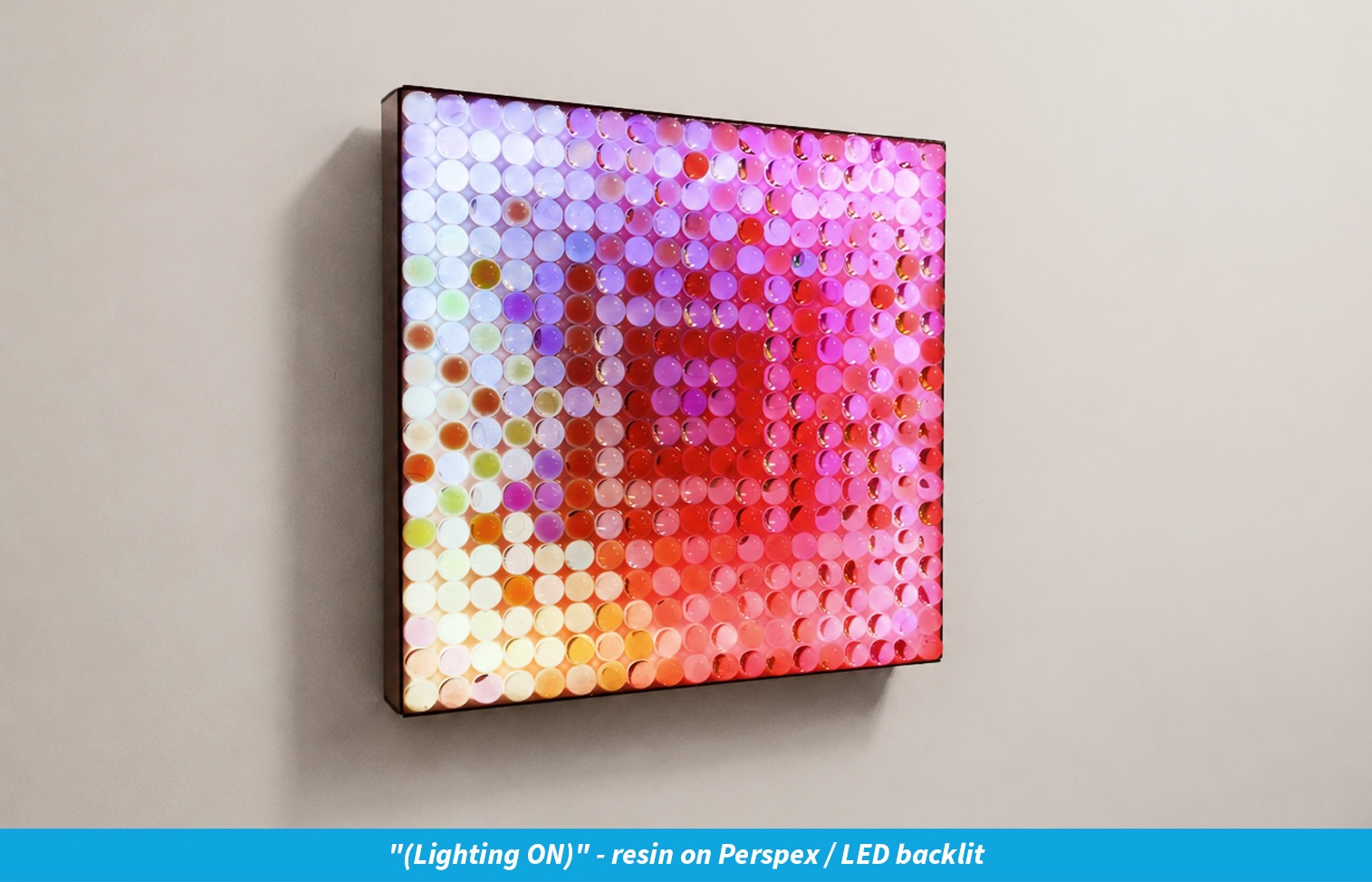
As my work evolved, I realized it needed to reflect who I am more fully, and music has always been a huge part of my identity. The shift into light happened almost by accident. I was testing a piece on white acrylic and noticed how ambient light was passing through the resin, bringing the colors to life in a completely new way.
That moment clicked instantly. It felt like I had found a bridge between my visual work and my musical background. From there, integrating light and motion became a natural progression rather than a conscious decision.

A.O.K — short for Art of Kay — emerged from Jeremy’s desire to reconnect with what makes his work truly his own.
After exploring the interaction between resin and light in his first solo show, After Hours, he realized that the most powerful part of the work was not simply the visual result, but the experience it created.
At the same time, music was pulling him back. During a period of travel through Europe, the next phase of his work came into focus: combining fine resin artworks with immersive light and sound.
Jeremy: So for me, A.O.K is about creating living artworks, pieces that can exist in a gallery space, but also transform into stage environments. It’s about designing experiences where light, color, and music interact in real time and evolve together.
ENTTEC: You’ve mentioned your background as a DJ: how much does music influence the way you design your lighting and visual effects?
Jeremy: A lot… it’s probably the foundation of everything I do.
I’ve spent a big part of my life on dance floors, in clubs and at festivals, but it actually goes back even further than that. I grew up around performance. My mum was on stage, and my dad worked as a theatre production director, so I was often backstage, watching how light, space, and sound come together to create an atmosphere.
I was always fascinated by how something as simple as light in a dark room could completely shift your state of mind. And when you combine that with music or performance, you can synchronize an entire crowd into a shared emotional experience. That always felt like magic to me.
That’s exactly what I’m trying to bring into my work. Whether it’s in a gallery or a live setting, I want the pieces to create a moment where people disconnect from everything else and fully step into the experience; even if it’s just for a few seconds.
ENTTEC: The combination of resin and light is central to the final visual result of your work. How do these two processes influence each other creatively?
Jeremy: The two are completely intertwined, I don’t see them as separate processes.
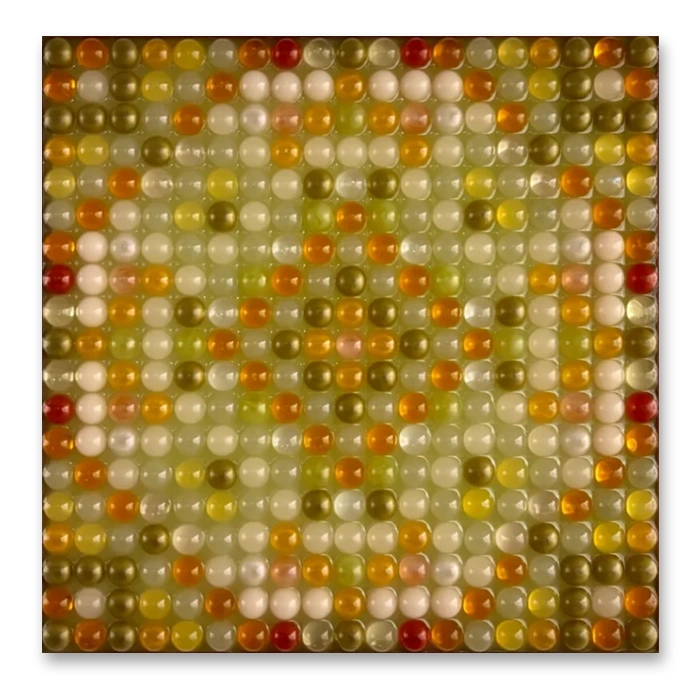
Resin is an incredible medium because it allows me to control not just color, but also opacity and transparency. That directly determines how light travels through the artwork and how it’s ultimately perceived. So every artistic decision I make in the resin every layer, every pigment, every finish is already influencing the final light outcome.
Each piece represents hundreds of hours of studio work. The artworks are made entirely of resin, including the frames, and there are dozens of steps involved. Every stage has to be carefully considered so that the interaction with light feels smooth, intentional, and immersive.
ENTTEC: What has been your experience so far working with LED pixel systems, and how has that opened up new creative possibilities in your work?
Jeremy: I would say that it’s been both challenging and incredibly rewarding.
Compared to the more plug-and-play LED systems I had used in the past, pixel systems are on a completely different level. They open up a world where you can design highly detailed visuals, control individual points of light, and create dynamic effects that can be scaled and synchronized with precision.
For an artist, that’s incredibly exciting, it essentially turns light into a fully programmable medium. It allows me to think beyond static illumination and start designing movement, rhythm, and interaction directly into the artwork.
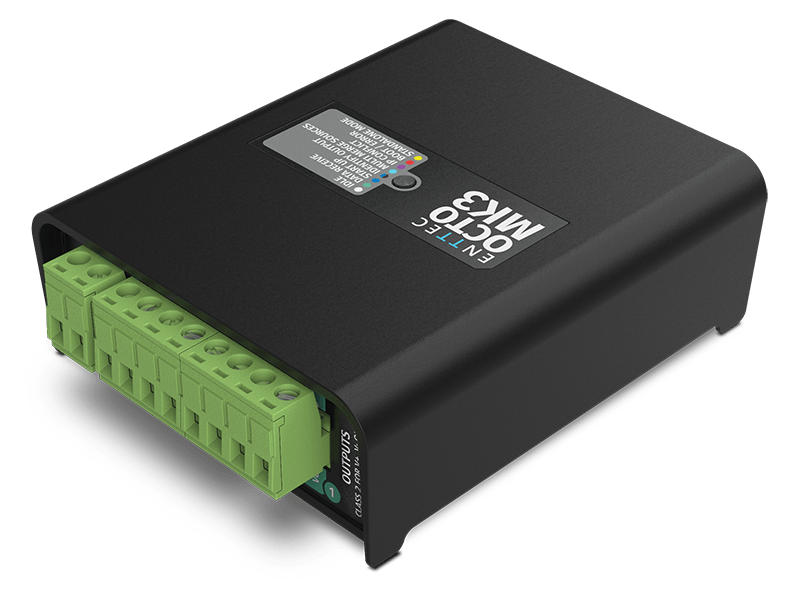
Working with ENTTEC LED systems, and especially the ENTTEC OCTO MK3, has really been a turning point for me. It made it possible to take these ideas out of my head and actually bring them into a reliable, scalable setup. Having that level of control and flexibility has been key in pushing the work forward.
Of course, it comes with its own set of challenges. There’s a technical learning curve, understanding programming, data flow, cabling, and how to connect multiple elements into a cohesive system. It’s not always straightforward in the beginning.
But that’s also part of what makes it so rewarding. The first time everything is wired, programmed, and you switch it on and it works exactly as intended, that moment is hard to beat.
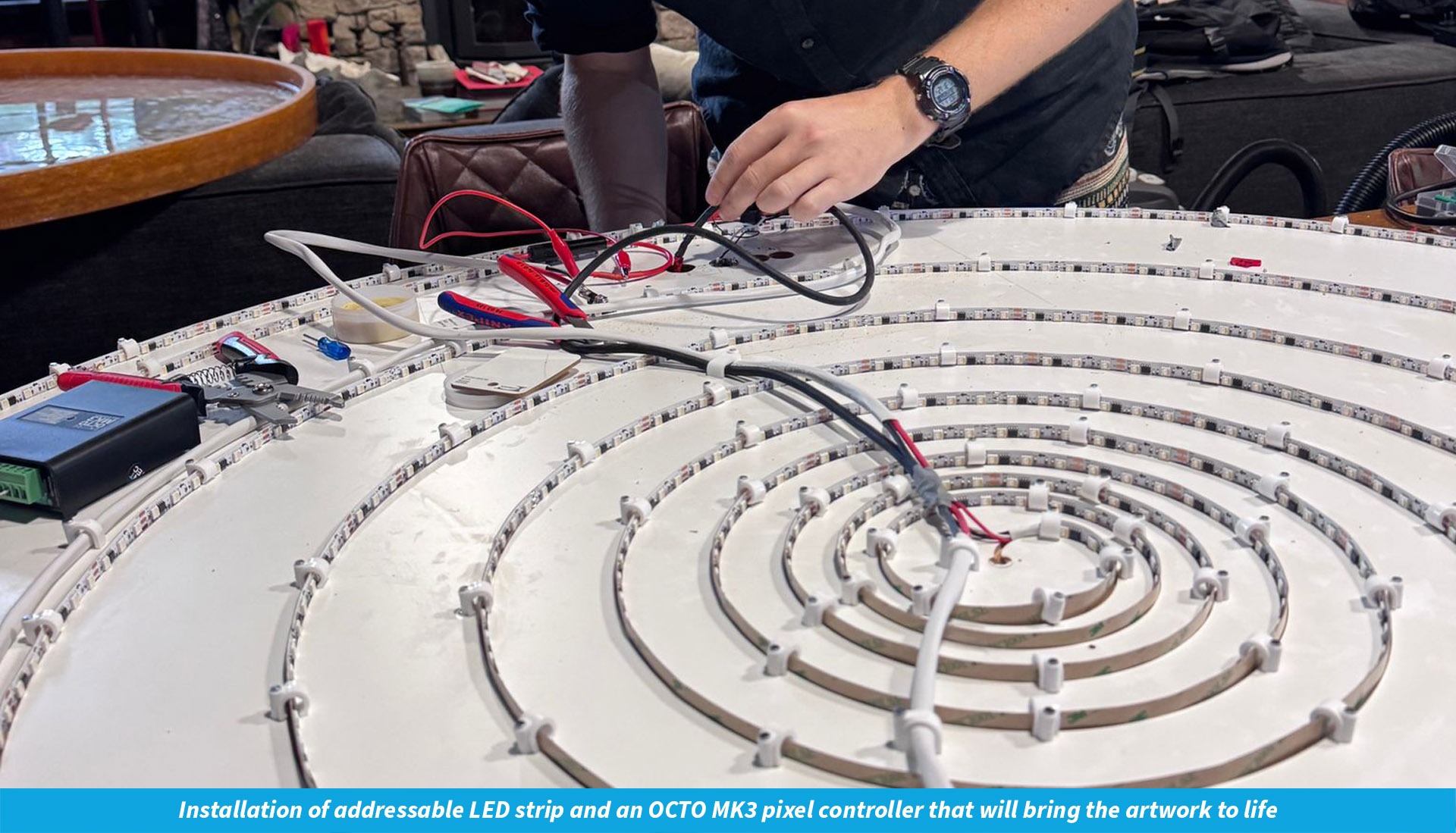
One of the biggest technical breakthroughs in the project came through developing a CNC-cut spiral groove system within the resin backing structures.
The design creates a vortex-like visual effect while also allowing dynamic lighting behaviours , including strobes, gradients and movement effects, to travel smoothly throughout the artworks.
Jeremy says the challenge now is scaling the system into something robust enough for live environments and large public installations.
Jeremy: On the technical side, integrating the lighting system into something cohesive and scalable has been a major learning curve. One of the ongoing challenges is developing a system that can function almost like plug-and-play in a live environment, where multiple pieces can sync together and respond to music seamlessly. It’s something I’m currently working on closely with my lighting engineer.
Finally, the next big step is making the artworks fully weatherproof, so they can be safely installed outdoors and used in larger-scale environments like festivals or public installations.


ENTTEC: You’ve mentioned plans around light festivals and potentially Burning Man. How do you see this work evolving in those kinds of large-scale environments?
Jeremy: Burning Man has had a huge influence on me, I am burner at heart. Bringing this work to the playa is a long-term dream, because it’s a place where art, light, and community come together in such a powerful way.
Beyond that, I really want to take A.O.K onto the global stage. Not just as an art showcase, but as immersive installations designed specifically for large-scale environments. For example, I’d love to create a piece for Fête des Lumières in my hometown of Lyon, which is one of the most iconic light festivals in the world. That would feel like a full-circle moment.
At the same time, I see a strong future for this work within the music space. We’re already starting to connect with artists, labels, and venues, and I can imagine these installations evolving into full stage environments. Something like 40 or more pieces lighting up a dance floor in a place like Ibiza, fully synchronized with the music, that’s the kind of scale I’m aiming for.
Honestly, I don’t think I can see all the directions this could go yet, and that’s what makes it exciting. It feels like the beginning of something with a lot of potential to evolve.
Although Jeremy’s installations currently exist primarily within gallery and studio contexts, the long-term vision is far more ambitious.
Future plans include:
● large-scale public installations
● music-responsive stage environments
● synchronized multi-sculpture systems
● weatherproof outdoor works
● fully immersive audio-reactive experiences
At the center of all of it remains the same core idea:
Creating moments where audiences feel transported into a living environment shaped by light, color and sound.
ENTTEC: If there were no limitations, where would you ultimately like to take A.O.K?
Jeremy: I would fully develop it into a complete immersive world. If there were no limitations, I would fully develop A.O.K into a complete immersive experience, combining large-scale installations, live performance, and music into one cohesive world.
I’d explore different formats and scales, refine the technology behind the light systems, and start creating fully programmed light shows that evolve in real time with the music.
One of the goals would be to eventually perform within my own installations, bringing together DJing, visual art, and lighting into a single live experience.
In the shorter term, I want to build momentum in Australia first, showcasing the work, creating strong collaborations, and developing partnerships that help bring these pieces into different environments, from galleries to events and public spaces.
Ultimately, the vision is to take A.O.K worldwide. I want these works to travel, to be experienced in different contexts, and to connect with people across cultures. The goal is simple, to create moments where people can step into the work and feel something real, wherever they are in the world.
ENTTEC: Jeremy, thank you very much.
Jeremy: Thank you — I’m excited for what comes next.
EXPLORE:
instagram.com/jeremy_k_a_y
jeremykay.com.au
ENTTEC OCTO MK3
Powerful quad-output eDMX to LED pixel converter with overdrive mode, transmitting up to 32 universes.